Beatlemania and Granddading

thth

Not Getting Younger Series

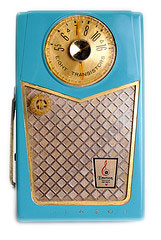
emersonpioneer888webRemember those transistor radios we had in the early sixties?

We listened to them as teenagers living in Hensonville, New York. The mountains, as my mother fondly called the area. Her family spent summers at the Windham Arms Hotel to escape the city heat, and we later moved to the remote place. When we were lucky enough to get static reception of “I Want to Hold Your Hand” or “She Loves You” on a transistor, we would yell for our siblings to run, and listen to the Beatles.

My brother says we got late night windsorselfixwebreception on WKBW, a Buffalo station. Buffalo was 337 miles away.

My transistor was a pastel color, pink or blue. It may have been a Panasonic and probably a gift from my grandmother. It did not work very well and constantly needed the battery replaced.

Fortunately, my older sister received the first Beatles album for her birthday. There was no static and we could sing along as my brother learned to play the guitar.

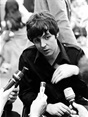
This memory came to mind when I read the Associated Press headline that Paul McCartney, who is seventy-two and not getting younger, has given up smoking pot. A little ironic now that it is legal in some places.

I fell in love with Paul McCartney on February 9, 1964, when the Beatles appeared on the Ed Sullivan show and for months after, imagined different scenarios of Paul selecting me out of millions of female viewers to be his wife. I’d be visiting NYC and accidentally bump into him on the subway or at the airport. It was always love at first sight!

My pining diminished shortly after, and Paul eventually married Linda Eastman, a Scarsdale, NY girl. The ordinary looking girl was unknown to most of us. We would learn later of her photographic accomplishments. I wonder if she dreamt  she would be the lucky one or if Beatlemania was only for a sixteen year old.
Linda Eastman’s father was Paul McCartney’s lawyer and manager however, they did not meet through him. They met at a photo shoot and married in 1969.

250px-The_Beatles_at_RishikeshWe all assumed the Beatles dabbled with grass, and possibly more, during their Maharisi Mahesh Yogi phase and studying Transcendental Meditation. I never gave much thought to their marijuana habit, and unaware that Paul was arrested in 1974 for possession.

This announcement was more of a public confession. However, McCartney called it a parental decision. But, he has been a parent for over forty years. Well, he is a granddad now, and wants to set a good example. I guess that is what happens when you are not getting any younger.

. . . .  just saying

Global Positioning System and the Hippocampus

I wrote this awhile back but think it belongs inThe Not Getting Younger Series.”

Gray739-emphasizing-hippocampus.png

Global Positioning System and the Hippocampus


     “Did you heard about Todd?”

     “Heard what about Todd?”

     “He fell while out walking.”

     “Oh that’s terrible, what happened?”

     “It’s a long story, something to do with the hippocampus.”

     “The hippocampus, what’s that?”

     “You never heard of the hippocampus? It is the part of your brain that remembers things, especially new stuff.  You know, if you move to a new neighborhood and go out for a walk, how to get back home. Where you parked at the mall or the date of a doctor’s appointment.

     Well Todd’s hippocampus is shrinking; just like he used to be six foot one, and is now five ten.  It’s part of the aging process. Remember “The Graduate” and Dustin Hoffman learning that the key to the future was plastics? The hippocampus is now the key to remembering, or so it seems.”

     “Are you sure? I read AARP’s recent article “Age Proof Your Brain,” It lists ten things, and I don’t remember reading about any hippopotamus.”

     “That’s because it’s new information. Perhaps your hippocampus is already damaged. Ever have hypoxia, heart attack, respiratory failure, sleep apnea or almost drown?”

     “I can’t remember.”

     “Don’t look depressed. There are things we can do like jumping up and down for extended periods. There is evidence that Exercise may slow shrinkage of the hippocampus, specifically the part that passes new information into permanent storage.”

     “Enough, tell me about Todd. I’m getting a headache”

     “Well, Todd goes on walks but is gone forever. Apparently, he gets lost in the neighborhood. Marilyn suggested he charge the GPS and take it with him.”

     “Todd’s not old and not forgetful. Who is Marilyn?”

     “Marilyn. . . his wife.”

     “Marilyn isn’t his wife. He’s married to Barbara.”

     “Marilyn’s his wife. Do you want to hear what happened or not? So Todd. . .  by the way he’s almost eighty, goes for his walk and gets lost. After hitting “GO HOME”  on the GPS, gets dizzy from recalculating, falls down and hits his head.  A neighbor called 911. They took him to Emergency, eight stitches and he is still confused.”

     “Todd’s not even fifty. His wife is Barbara, I had them to dinner. What did the doctor say?”

     “Stop using the GPS and see his primary doctor in two weeks. It’s probably his spatial intelligence. There is evidence these GPS systems are effecting everyone’s ability to navigate, not just us Baby Boomers. I’m talking about the Todd and Marilyn Smith on the corner.”

     “Todd doesn’t live on the corner? How will they get to the doctor’s office without the use of a GPS?”

     “Barbara’s thinking of taking a taxi.”

     “You mean Marilyn, right?”

     “Whatever.”                                                                                         

                                                   . . . just saying

Vertigo

Vertigo/The Not Getting Younger Series

   th  I am in Albuquerque visiting my son and have Vertigo. Today it’s not so bad. I just cannot bend over, or rather tilt forward or position my body even on the slightest incline. It is best if I am in a posture perfect position, which is not so bad. At least I am not in bed.
      It started on last Thursday. I woke feeling fine but by 9AM had a severe case of the chills. I was already completely dressed and wearing a sweatshirt but got in bed, and piled on four assorted blankets and comforters. Still ice-cold, I turned on a room space heater to high and fell asleep for four hours. When I got out of bed, I was still fatigued and could not walk straight unless guided by a wall. My head felt too heavy for my body and I was dizzy, very dizzy.

     My son thought it best I visit the emergency room and I could not argue. He took me to the hospital where my daughter-in-law works to be certain I would get the best treatment, and he was right. When he parked by the emergency room entrance I experience a  sense of helplessness like never before, and was thankful my son was at my side. 

     An EKG test ruled out a heart attack. My son spoke to the doctor asking questions, and supplying answers I was too dizzy to ask. It was a complete role reversal and since I am not getting younger graciously accepted his loving care.

     When I flunked the “follow my finger, touch my finger and then your nose test,” and three people rushed to support me after being told to stand and walk, a head scan and MRI were ordered.

     The doctor laughed when I asked if my brain was normal. Then commented that there was nothing acutely wrong. The prognosis was vertigo. I was given a prescription for Meclizine and sent home dizzy and nauseous. 

     The next morning I did an online search and learned vertigo usually is a disorder of the inner ear BPPVBenign positional vertigo exercises | Vertigo …that affects body balance and that specific exercises can help.

     Another cause discussed in the u-tube video by Ninni Girl, was acute vitamin B12 deficiency.  Click skip the advertisement to view the video directly.

     Just when I was getting back on my horse and thought I would be posting consistently this happened, but I am thankful to have an ever so sweet memory of  my son and me.

. . . . just saying

Kayaking and The Speed of Thinking

creative-genius-mindset-mind-map1

 The Not Getting Younger Series

Kayaking and Speed of Thinking

I was unfamiliar with the term speed of thinking until recently. I knew about the speed of lightning and speed-reading but not speed of thinking, and since I am not getting any younger, it grabbed my attention.

All my other body parts are slowing. Unpackaging a sinus tablet can be a lengthy process, and if invited to lunch, might decline if I have a doctor’s appointment the same day. Therefore, it makes sense that thinking be included in the group of what takes longer. After all, when asked the name of the actor in “The Bridges of Madison County,” you know the one who was in that movie about the French chef; I might respond Meryl Streep immediately . . . or the next day. Whether this is a short- term or long-term memory loss is debatable because I have been a Meryl Streep fan forever and instantly recalled her name when the movie, “It’s Complicated” was talked about recently.

Regardless, working memory is the phrase that feels comfortable to me. Although retired I want to keep some part of my brain working.

Minds Refined discusses basic facts of memory and aging, and defines four areas of cognition:

  • Attention (concentration)
  • Working memory (retention)
  • Long-term memory (recollection)
  • Information processing speed (quickness)

Evidently, these skills peak and start to decline early in life. Maridel Reyes says, “Once we hit our late twenties, the aging process begins and we begin losing neurons—the cells that make up the brain and nervous system. By our sixties, our brains have literally begun to shrink. Though these brain changes may sound a bit scary, the process is natural and it happens to everyone.”

“Sound a bit scary and natural!” Obviously, Maridel Reyes is younger than fifty, and has no clue. It does not feel natural to forget where you parked the car. Ask any Baby Boomer. 

However, she does present a good case for understanding that although I told Mr. Wonderful, my husband of forty-three years, I was playing Bunco with Claire on Tuesday; he forgot and purchased a Groupon Coupon to Kayak with Jimmy and Joanne. Then added insult to injury, saying he could not remember our conversation. I was thinking divorce. But apparently it is understandable, our brains are shrinking. So I applied her model to the event.

  • Attention . . . It was “The Masters” weekend. 
  • Working Memory . . . He’s never played Bunco.   
  • Long-term memory . . . He remembers playing Pinochle. 
  • Information processing speed . . . After viewing the offer “FOUR HOUR GUIDED KAYAK TRIP FOR TWO $35 ONE HOUR LEFT,” he hit buy now immediately. 

The good news is, although the aging process cannot be stopped; it can be slowed. We know that a healthy active lifestyle is important. “The key is attention. Attention is the gateway to memory. Memory is not automatic; if it were, our heads would be filled with all kinds of useless information. Rather, good memory takes effort and that effort is best applied by paying attention to what you want to remember.”

I can you hear my mother saying, “PAY ATTENTION! PAY ATTENTION!” As I inform Mr. Wonderful, I’m playing Bunco on Tuesday.


. . . . Just Saying

The Not Getting Younger Series/Understanding Nothing

th

Understanding Nothing

      The local newspaper, “The News Journal,” informs readers of the number of days left in the year and quotes a notable person on a daily basis. I usually start my day reviewing these tidbits of information. Somehow, the number of days to the year’s end surprises me. Although I should know without checking, since I always look the day before. The quotes vary from familiar and meaningful to humorous and ridiculous.

     On a recent Wednesday, when there were 247 days left in the year, the quote  was by Edward Dahlberg. Initially I was amused and thought he made sense, then I was perplexed but eventually annoyed.

     Since I am not getting any younger and easily confused, I gave it more thought and made a list of the possibilities.

“It takes a long time to understand nothing.”
By Edward Dahlberg

      • You forgot what you thought you knew, and now understood nothing
      • You never knew enough to understand nothing
      • You are now old enough to understand nothing

     Who was this man giving me a headache? I went online feeling stupid, and searched for an explanation. There was none, but learned Dahlberg, who is frequently quoted, was an accomplished author during the early nineteen hundreds. His words were too obscure to others.

     Getting no satisfaction I turned to the dictionary for a tangible meaning of nothing. Evidently nothing can be a noun, something that is nonexistent or a verb, as in a trivial action. Perhaps I needed more time to think about nothing and went back to doing the laundry. 

     I went to sleep that night ruminating about understanding the absence of meaning in everything.

     On the “246 day left in the year” I awoke smitten with myself, and feeling smarter than Mr. Dahlberg. However, because I was still not getting younger, made a list of other interpretations of the quote, “It takes a long time to understand nothing.”

• Understanding nothing is pointless
• There is nothing to understand
• Move on quickly once you understand nothing

. . . . just saying

PS: Another Dahlberg quote: “Every decision you make is a mistake”

Hobnobbing and Sailing

1+3MU+685_programdetail_person.asp

Some would say I am MIA, not having published a blog post since January. I apologize. We did move and I could use unpacking and decorating the new hut as an excuse. But the truth is, I am struggling creatively. In the past an obscure word or thought would dance in my head until I put pencil to paper. Recently I have only pondered what to eat for lunch and how to get a better night’s sleep.

This morning however, the word hobnob and music from Gilligan’s Island interrupt my thoughts. While Charlie Rose on CBS This Morning asks questions about Google and mobile websites, I hum  “What Shall We Do With the Drunken Sailor?” When Gayle King comments about a lost wedding band returned to a Boston marathoner I blank out, and say hobnob aloud.

You see, I have been hobnobbing. To be more specific, I just returned from a Road Scholar trip called, “Day Sailing for Beginners.” And yes, I feel like I am swaying on land and extremely dizzy when bending over.

Road Scholar educational adventures are conducted by Elderhostel, a not for profit world leader in lifelong learning. The trip description read, “Have you always wanted to experience the freedom and pleasure of sailing? Then this small-group program is for you.” The adventure included five days of sailing in Boca Ciega Bay (St. Petersbury, Florida), three meals a day and lodging for $935. A bargain! I stopped reading and mailed my check. Realizing “learning” to sail, not sailing, was the trip focus, while reviewing the trip itinerary and recommended reading list. I was still game. What the heck, I earned a knot-tying badge as a Brownie and know how to swim.

The small group of nineteen consisted of twelve women and seven men. The refrain “Ear-ly in the morning,” from the song, intrudes my thoughts as I now write, and recall the trip orientation and dinner on Sunday evening.

There were three couples, of which one were in their eighties and married sixty-five years. Seven of the participants were from Florida, four from New York and the rest scattered between Alabama, Indiana, Massachusetts, Tennessee, Texas, and Vermont.

Not everyone was retired. Their backgrounds were eclectic, varying from kindergarten teacher, geophysicist, law professor, computer programmer, and commercial farmer. Many had traveled extensively and lived in other countries. Several enjoy ballroom dancing. Two disclosed they had built sailboats in their youth then reluctantly admitted the boats sank.

We all lacked sailing experience when we entered the lecture room at Eckerd College,  to met, the lead instructor. He earned his facial wrinkles not by smiling but from numerous sailing certifications and dedication to the sea. Attractive, although, his nose was clearly designed to hold glasses on his face, his full head of white hair streaked with yellow suggested he was older than he looked. He had skinny knees and I speculated his mustache had been penciled on after shaving. He shut the lecture room door quickly, and a no-nonsense approach sprinkled with infinite patience was quietly revealed. He stood alongside a podium, a smart-board marker in his hand and said, “I am Richard, your Captain.”

Learning to sail was a wonderful experience. The learning curve was high however, and on Wednesday, I vowed to either do more new learning or abandon all learning that is new completely when my brain twisted Jibe and Gybing. That night a fellow crewmember stayed up late replacing the words in “What Shall We Do With the Drunken Sailor,” with nautical terminology.

A Brit, she shared her, “Sea Shanty in Honor of the Inestimable Captain Richard,” in the morning, and instructed the group to repeat each line three times then follow with the refrain “Ear-ly in the morning.”

Reef him to the boon vang, til he’s bowlined
Moor him to the jib sheet til he’s cleated
Winch him in the pulpit til he’s port tacked

There are numerous other stanzas calling for wrapping, lashing, tying, and dragging Captain Richard about. The group loved her rendition and ignored the implication of  bondage.

I am still dizzy when bending over and debating if it is a side effect of new learning or a brain tumor. I have doctor’s apppointment next week.

. . . . just saying

Moving Soon

GE DIGITAL CAMERAAging & Attitude

   We will be moving soon, back to Halifax Plantation; the community we first retired to in 2007. We have been living in Shangri-La, aka a villa apartment, where we have access to several pools and the beach is a three-minute walk. I can meander up to the lobby for afternoon coffee and bring back a free copy of USA Today. The flowers are switched out after several months and housekeeping sweeps outside our door. We are definitely spoiled.

   I am conflicted about moving. I like living in a smaller place and having zero outside chores. On the plus side we will have neighbors and space for entertaining.

   However, Mr. Wonderful* is thrilled. He will have a garage, be able to wash the car and kibitz with his golf buddies.

   As I reread what I am writing, I realize what a charmed life we have. Yes, our first years in retirement were consumed by Bob’s symptoms of pancreatic cancer, but he survived, very few do. He has no pancreas. I have been diabetic for thirty years and use an insulin pump, now we are both insulin dependent diabetics. It makes for some humorous situations.

   Life is good. He has all of his hair and teeth, and I have most of my hair and all of my teeth. We both can get out of a chair unassisted.

. . . just saying

*Mr. Wonderful is my husband of forty-three years

1984 Vs 2035

 259/365 Clock Work by martinak15 (CC BY 2.0)clockwork

Aging & Attitude

Happy New Year!

It is hard to believe it is 2015 but it is.

Mr. Wonderful* and I celebrated by eating at McDonald’s on the way home from Orlando International. We were hungry. We were away for sixteen days and that return flight was our best choice, besides New Year’s is not about fun; we are retired and have fun all the time. New Year’s is about making changes, anyway; it was a direct flight.

One of life’s challenges is change or to move forward, because there is no standing still and consequently we will go backwards or decline. This is evident with aging, and the realization none of us will escape wearing diapers and eating soft food. We can only hope to keep up with the changing world around us. Perhaps these thoughts are the cause of my recent dwelling on the novel “Nineteen Eighty-Four” by George Orwell. You must recall the terms it made famous; Big Brother, doublethink, thoughtcrime, Newspeak, Room 101, telescreen, 2+2=5, and memory hole.

Reading the book as a sixteen year old scared the crap out of me. I could not imagine the year 1984, and doubted I would be alive to have Big Brother watch me. And if I were, would insist 2+2 equaled four and be convicted of thoughtcrimes .

It was 1964 and 1984 was twenty years away.

In 2015, I have the same predicament. I cannot imagine the world twenty years from now, and doubt I will be alive.

Not true! Senior Journal reports, “– Happy New Year! If you are age 65, and pretty much average, you should expect to live another 19.3 years, according to new life expectancy projections.”

Well I am pretty much average. In twenty years I will be eighty-seven and Mr. Wonderful eighty-six. Yes, I married a younger man. Our son will be sixty; daughter, fifty-eight and grandchildren in their thirties.

I am considering going vegan or at least eating blueberries for breakfast.

What will the world be like in twenty years? Will we get flying cars, personal robots and travel in space? Some people predict a Utopia existence free of pollution and poor health. Mandatory ID chips inserted in our brains will provide education and track our location so there will be no forgetting where you parked or left your keys. Right, we won’t need keys, nor be parking.

So now I am rethinking my New Year resolutions and changing my expectations. How important is losing five pounds?


. . . . just saying

*Mr. Wonderful aka, Bob, my husband

2014 Weight Loss Resolutions

New Year’s Resolutions

Polar Bear Plunge

Teachers Make A Difference

2000_4_founderCharles Best & Donors Choose

“CBS This Morning,” with Charlie Rose, Norah O’Donnell, and Gayle King is my favorite news show. I enjoy the television program and tape the entire two-hour broadcast. This way if interrupted by brushing my teeth or putting in a wash, I can fast forward during lunch and view what I have missed. The show’s tag line “Real News” is evident in many segments and laughter is kept to a minimal. I love, love. Love the “90 Second Eye Opener,” that captures the day’s top stories and more importantly, special reports inform me about things I do not know about, like Donors Choose.

Donors Choose is an online charity that collects and distributes donations to public school teachers across America, so teachers do not have to take money out of their own pockets for projects.

“Teachers ask, you choose,” is their mantra.

The program was started in 2000, by Charles Best, a history teacher at a Bronx high school. He and his colleagues were spending their own money on school supplies. Best built a website for teachers to post classroom project requests and people to make donations. His peers posted 10 projects, but Charles did not know any donors, so he funded those projects, anonymously. The other teachers thought the website worked and rumors spread. Fourteen years later, $292,646,946 dollars have been raised, and 528,697 projects funded. Clearly, teachers make a difference and I recall one that made a difference in my life.

The writer in me would not let the memory rest until I found some words in which they could be expressed.

Not Forgotten  

Miss Brown, my first grade teacher listened to me, “I was absent on Tuesday, and didn’t get a wooden box.” The other students had retrieved their Mother’s Day project from the supply cabinet and sat at their desks arranging paint and paint brushes.

   She smiled and said, “I saved one just for you.”

   I thought her hair yellow, like a Crayola crayon in a package hugged by red and orange. Her blue eyes sparkled and her Pageboy haircut bounced with enthusiasm when she taught. My heart raced as she held my hand, and we walked to the back of the classroom, my attention on her penny loafers. Together we bent to look inside the cabinet, darkness prevented a good view, but as my pupils adjusted, a wooden box appeared.

Miss Brow is not her real name. I cannot remember her name only her kindness.

. . . .just saying