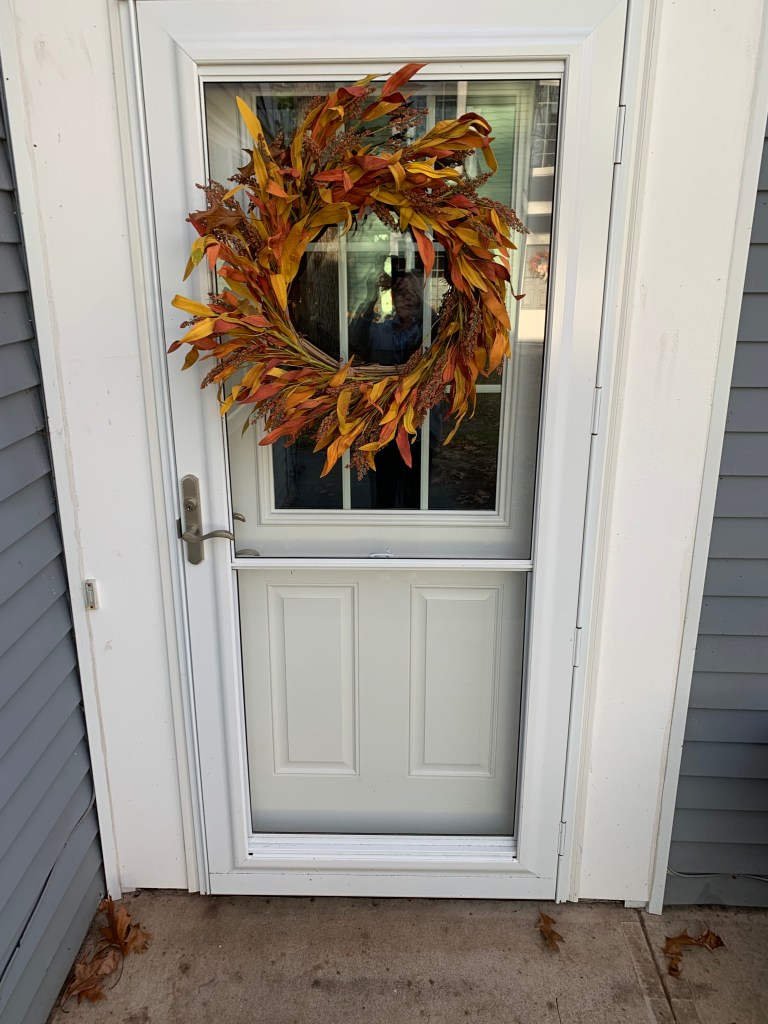
We’re visiting family in Delmar, N.Y., and the leaves are falling fast.
We arrived Wednesday to a chilly temperature of 35 degrees. I enjoy the crisp air and sleeping under a ton of blankets, so the adjustment from Florida is welcome. There is only a smidge of color, and most of the leaves have fallen. The leaves are blown into the street, not raked, and not bagged. The town routinely vacuums them, following a schedule similar to their garbage pick-up.
You can view my story, Wheels of Circumstance at Miriam Drioi’s That’s Not Me. I’m a contributing writer to her blog series.
The story originated when I met Vera in college in 1966. She and her mother had to run into the woods to flee the Russians and escape to Austria on November 4th, 1956
I’d love you to share this story, with family and friends, if you’re comfortable .
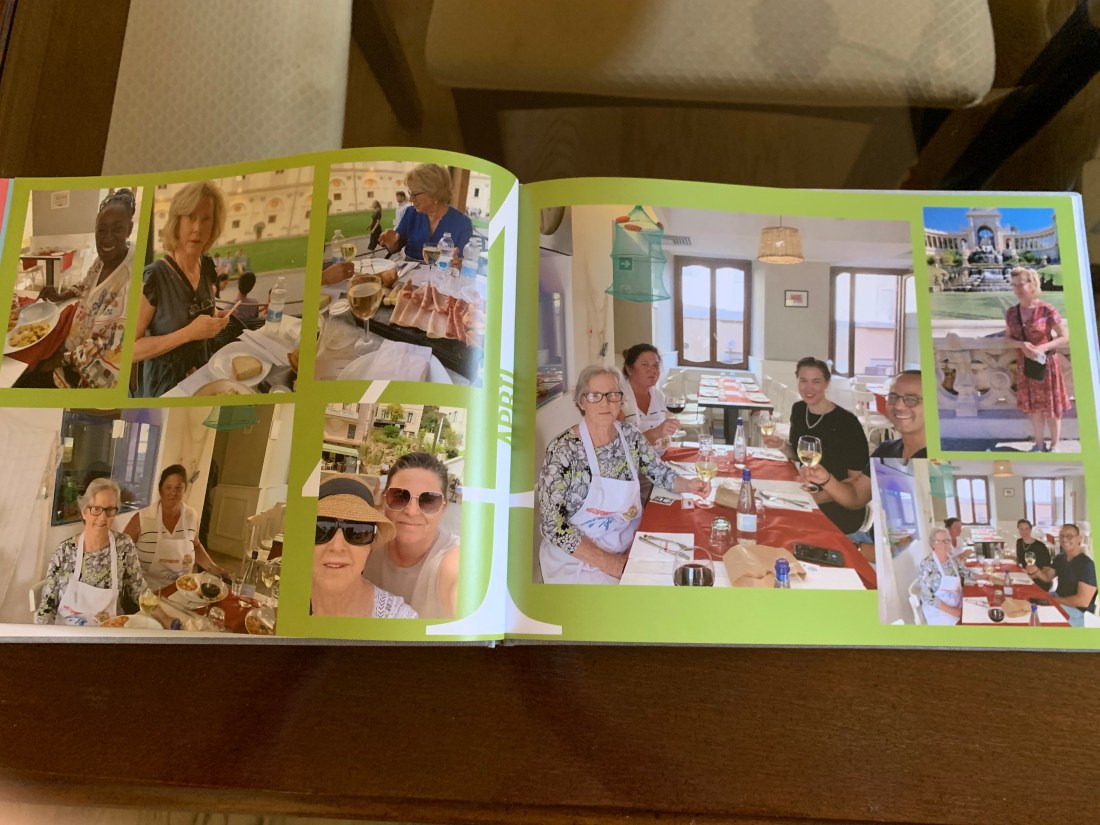
Here’s a great idea Choose favorite pictures, saved on your phone over the past year, and make a photo-book. There are many companies, some more popular than others, but the one I used can upload them to your phone. I can’t tell you how because my granddaughter-in-law made the magic happen.
I have to confess it took me hours and hours to do the rest, and than hours to use the sale voucher I purchased, but it was worth it.
I received the book today.
I don’t take many pictures, so I had to beg, borrow, and steal from other places. But, next year I’ll think about making a book as I take pictures throughout 2024.
It’s hard to believe there are only 65 days left in the year.
…just saying
You don’t need a WordPress account to comment. Write your comment in the box below or click on the caption icon to the right of the title above. Ignore requests for a name/ username and press post or save. Your comment will be posted anonymously. Please follow me to receive notification
Toes that no longer wiggle, giggle or dance, they sleep
Then suddenly cry, “Sudden leg syndrome is attacking my feet.”
Hands that can’t twist open a door
Or flip pages any more
Kitchen tops decorated with items I don’t want not forget
A part of my brain
Ridge in thought
Like stiff knees reluctant to bend
Grey cells will not receive or send
Exhausted and depleted
Comfort myself with food Mama cooked best
Meatloaf and mash-potatoes
Gives my cerebellum a rest
So, what if I forget to lock a door, a date, a score. . . and more
I’m old, invisible, and small
Don’t fret_____ explore!
Close your eyes, remember your youth and come with me
Imagine places we have never been before
. . .just saying
You don’t need a WordPress account to comment. Write your comment in the box below or click on the caption icon to the right of the title above. Ignore requests for a name/ username and press post or save. Your comment will be posted anonymously. Please follow me to receive notification
(The word pearl was a prompt given at a writing session. A strong female character came to mind and her story enfolded.)
Pearl
The last time I saw her, she was young; youth sparkled in her eyes. Now the sparkle is gone, the jade blue color diminished by time; her convictions etched in lines across her face. Her once narrow nose is broader, broken from standing up for others. Her chest sunken with anger, not there the first time we met.
“Pearl is that you?” I inquire.
She strains to turn towards me, her range of motion greatly compromised.
“Yes, I’m Pearl,” Her voice recalls dignity, and she pauses to ask, “Have I had your acquaintance?”
It was 1971; we got on the Concourse Avenue bus in the Bronx, each with a child in hand. She took notice of my bruises and we became friends.
I take the seat alongside her and gently touch her forearm, “Pearl, it’s me Rosa . . . . Rose, remember. . . .” I expect her to ooze with gladness, say, “Lordy, Lordy, Rose, how are you?”
Instead, she says “Rose? Can’t recall a Rose, refresh my memory child.”
If she remembers me, she would never mention beatings, and hiding in safe houses. I remind her of Bainbridge Park; how we would meet after lunch, let the children play in the sand box then walk them to sleep in strollers.
“I remember sunshine and playgrounds, how is your boy . . . ?”
“Danny, Dan, he’s at Fordham University; studying to be a lawyer.
Danny was five when I made the decision to leave the morning after a beating. I phoned my sister, asked her to get him from school, and left a note for John saying I didn’t want a divorce, and wouldn’t fight him for our son.
I worried about leaving Danny behind. Pearl said, “Don’t fret; your boy be fine,” and hooked me up with people.
John was a New York City Police officer and protected by his brothers, but the force would not ignore his beating a child.
Sill, I moved every four months with a new identity.
Three years later, the Richmond Virginia Newspaper reported the hunt for the killer of John McGill, a NYC Police Officer shot in the line of duty. I went home; stood next to his coffin, widowed with a pension; my eight-year-old son at my side.
John had never mentioned I was gone to anyone on the force.
Now Pearl dozes next to me, and her head bobs from side to side startling herself. “What was I saying?”
“We were talking about the time we brought the boys to the Bronx Zoo and rode the train around the park ten times. You packed potato salad and fried chicken; a stranger asked to buy your picnic lunch.”
The mention of potato salad crystallizes in her milky eyes, “I remember the day you left, bruised and wearing borrowed clothes; it broke my heart knowing I’d not see you again. How you been?”
“I never got to thank you, Pearl. . . .” She interrupts my attempt at gratitude and explanation of regret .
“Hush, Woman . . . tell me something that will make me smile.”
* * * just saying
(Originally posted on November 23, 2014)
You don’t need a WordPress account to comment. Write your comment in the box below or click on the caption icon to the right of the title above. Ignore requests for a name or username and press post or save. Your comment will be posted anonymously.
My joints are stiff, my muscles suffer from atrophy and my brain is rusty. There is no doubt about it. It is called growing old, and the decline goes hand and hand with aging.
But is this true?
What if physical decline is not as heavily tied to aging as we think?
What if our brain is like a muscle that suffers when not used?
The expression grow old suggests a condition we developed. However, many ninety-year old’s have more energy and are less forgetful than peers in their seventies. Some of us become decrepit, some don’t and some maintain a quality of life well beyond their physical ailments. Why?
I thought of Christopher Columbus, not because he was old but because he disputed the belief that the world was flat and travelers would fall off. Yes! I know he didn’t set out to prove the world was round; the hope of profit from the spice trade made him set sail, but his frequent voyages proved the point. The world was round. People had been limiting their behavior based on a false belief.
Growing Bolder, a movement to rebrand aging, thinks it doesn’t have to be so. There is a PBS television show, podcast and magazine and numerous resources to support the idea.
“To change the way we age, we have to change the narrative around aging. Growing Bolder is doing just that. Learn how to stop growing older and start Growing Bolder.”
You don’t need a WordPress account to comment. Two ways; in the comment box below or above the picture and to the right of the title there is an icon that will change color. Click on and you can comment. Ignore request for a name or username and write your comment. Press post or save.
I have not been thinking much. I could call it brain fog or fizz, however, I prefer pause. My brain is on pause. There is no debate on whether handshaking and hugging are things of the past or who will win the next presidential election. I avoid watching the news and skim the newspaper. What I do ponder is; who invented dental floss and when did fast-talking become acceptable? Hopefully, it is aging and not a yet to be identified dementia.
I searched online. Evidently, ancient ruins reveal chewsticks and horsehair as floss has been used for a long time. In 1898 Johnson & Johnson patented dental floss. I did not know that.
Pickled Beet and Grapefruit Salad
I have to stop imagining a virtual Thanksgiving dinner, so when I sat down to eat lunch thought; are there many vitamins in the beets? There are; manganese, iron, vitamin B9, vitamin C, potassium, and betanin.
“Manganese is a vital nutrient found in veggies and fruits. Beets have a lot of manganese which directly promotes bone health. This mineral is essential in the development of bones. When combined with other nutrients, manganese helps in maintaining a healthy bone mineral density.”
Iron
“If you have always wondered does beetroot contains iron, you are not alone. I discovered a beetroot source of iron and found my replacement for the pan-fried liver. Iron is vital for your body to keep diseases like anemia at bay. Beets iron also helps with boosting the body’s immune system function. The iron content in beetroot juice also helps in boosting hemoglobin, reducing fatigue, and improve concentration. Iron improves your sleep pattern as well.”
Vitamin B9 or “Folate assists in the formation of red blood cells. It is also a core nutrient in the synthesis of DNA which determines our human attributes. Combined with vitamin C, vitamin B9 promotes gut health and helps the body absorb proteins better. If you are into fitness, red beet vitamins can help you bulk up faster.”
Vitamin C “is a common ingredient in our meals. It helps us fight the common cold by boosting our immune system. As a water-soluble vitamin, vitamin C lowers stroke by 42%. Vitamin C is rich in antioxidants which slow down the aging process. This vitamin also helps in reducing inflammation and staving off cardiovascular” disease.
Potassium
Potassium “is also one of the vitamins and minerals in beets. It reduces the risk of stroke and hypertension. Increased intake of potassium also promotes the excretion of excess sodium via the urine. Potassium is also good for heart health.”
Betanin
“Betanin is the food additive that gives beet its red hue. As one of the beet juice vitamins, Betanin has antioxidants effects on the body. It promotes skin health and reduces the rise of free radicals in the blood. Just like other beetroot vitamins, Betanin also helps in regulating blood pressure.”
I did not know any of that and now glad I eat beets.
My search for fast-talking revealed nothing about the practice. You know what I am talking about. People speed speaking. I can hear the sounds, however, can not process the content.
Hopefully, it is aging and not a yet to be identified dementia.
“The question is, not what you look at but what do you see” Henry David Thoreau
The Lost Art of Thinking
Jesse Itzler, owner of the Atlanta Hawks and author of “Living With Monks,” responded to Nora O’Donnell’s interview question, “What did turning off your phone teach you?” by saying; “That I wasn’t doing a lot of thinking, thinking is a lost art.”
Evidently, he had to shave his head and travel to Tibet to figure that out. And although shaving his head was unnecessary, as Monks no longer shave theirs, he gained enough wisdom to write a book and speak out about this epidemic of not thinking. I am calling it an epidemic and believe it began with the introduction of calculators in classrooms. Think about it, can anyone do simple math?
Itzler is married and has four children, and went on this quest to be a better husband and father. Previously his focus had been on physical strength and endurance discussed in his book, “Living With Seals,” which John Dickerson was quick to clarify were Navy Seals.
Itzler is not the first or only person to suggest that there are side effects to technology and benefits to turning off your phone. Ted Koppel (CBS News) interviewed Nicholas Carr, Bryan Reeves and Justin Rosenstein on the topic and all agree the internet is making us stupid, tinkering with our brains, and future advances will make matters worse.
We have apps to remember our favorite songs, ask Alexa for basic information, and depend on Google Maps or a GPS for directions even to walk. More alarming is our assumption the answers are always correct and no longer question the logic or accuracy of the information being sought.
We have heard stories of automobiles hanging off cliffs and drivers hesitating before driving into a lake because of GPS misinformation, proving the point.
Were they thinking?
In defense, Google Map says the driver failed to upload current information to their device and or the roads were yet to be constructed.
Worse, research now indicates that apps are “remapping the brain,” an NPR radio discussion explored the topic saying;
Writer Alex Hutchinson explores this phenomenon in a recent issue of the Canadian magazine The Walrus.“Neuroscientists are starting to uncover a two-way street: our brains determine how we navigate, but our navigational efforts also shape our brains,” Hutchinson writes. “The experts are picking up some worrying signs about the changes that will occur as we grow accustomed to the brain-free navigation of the GPS era.”
Hutchinson’s explanation about spatial navigation reliance on the hippocampus, and stimulus methods that use the caudate nucleus, the brain’s center of motor control having different effects on the brain is complicated, my take; if you use a map you have to think, if you use a GPS you are following directions, blindly, there is no time to think.
Technology eliminates the step of thinking, which is the reason we want more of it. It is easier, faster, and smarter and dependence on a calculator or GPS does not appear to be a problem, yet. Although Hutchinson also states, “Other studies have tied atrophy of the hippocampus to increased risk of dementia.”
Perhaps we do need to think about those things?
I remember Mr. Davis’, my WAJ High School math teacher, response to my belly aching about Geometry saying math trained the mind to think logically.
What do you think, have we lost the art of thinking?
I was unfamiliar with the term speed of thinking until recently. I knew about the speed of lightning and speed-reading but not speed of thinking, and since I am not getting any younger, it grabbed my attention.
All my other body parts are slowing. Unpackaging a sinus tablet can be a lengthy process, and if invited to lunch, might decline if I have a doctor’s appointment the same day. Therefore, it makes sense that thinking be included in the group of what takes longer. After all, when asked the name of the actor in “The Bridges of Madison County,” you know the one who was in that movie about the French chef; I might respond Meryl Streep immediately . . . or the next day. Whether this is a short- term or long-term memory loss is debatable because I have been a Meryl Streep fan forever and instantly recalled her name when the movie, “It’s Complicated” was talked about recently.
Regardless, working memory is the phrase that feels comfortable to me. Although retired I want to keep some part of my brain working.
Minds Refined discusses basic facts of memory and aging, and defines four areas of cognition:
Attention (concentration)
Working memory (retention)
Long-term memory (recollection)
Information processing speed (quickness)
Evidently, these skills peak and start to decline early in life. Maridel Reyes says, “Once we hit our late twenties, the aging process begins and we begin losing neurons—the cells that make up the brain and nervous system. By our sixties, our brains have literally begun to shrink. Though these brain changes may sound a bit scary, the process is natural and it happens to everyone.”
“Sound a bit scary and natural!” Obviously, Maridel Reyes is younger than fifty, and has no clue. It does not feel natural to forget where you parked the car. Ask any Baby Boomer.
However, she does present a good case for understanding that although I told Mr. Wonderful, my husband of forty-three years, I was playing Bunco with Claire on Tuesday; he forgot and purchased a Groupon Coupon to Kayak with Jimmy and Joanne. Then added insult to injury, saying he could not remember our conversation. I was thinking divorce. But apparently it is understandable, our brains are shrinking. So I applied her model to the event.
Attention . . . It was “The Masters” weekend.
Working Memory . . . He’s never played Bunco.
Long-term memory . . . He remembers playing Pinochle.
Information processing speed . . . After viewing the offer “FOUR HOUR GUIDED KAYAK TRIP FOR TWO $35 ONE HOUR LEFT,” he hit buy now immediately.
The good news is, although the aging process cannot be stopped; it can be slowed. We know that a healthy active lifestyle is important. “The key is attention. Attention is the gateway to memory. Memory is not automatic; if it were, our heads would be filled with all kinds of useless information. Rather, good memory takes effort and that effort is best applied by paying attention to what you want to remember.”
I can you hear my mother saying, “PAY ATTENTION! PAY ATTENTION!” As I inform Mr. Wonderful, I’m playing Bunco on Tuesday.
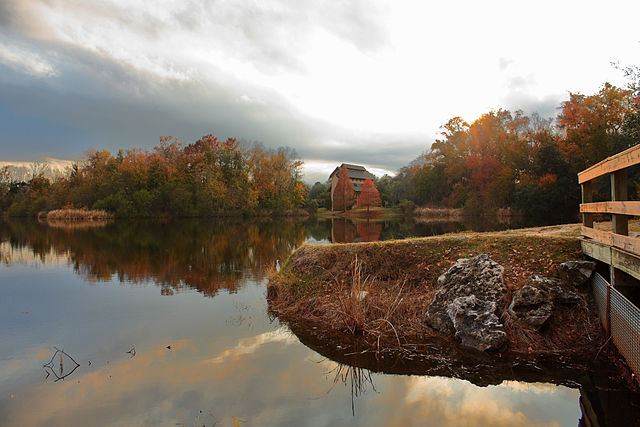
In Florida, the hot summer days never cease. The temperature does not drop; the leaves fade; never glory in red, yellow, and orange changes. The median temperature, eighty-eight, in June, July and August varies only one degree in September, but the days grow shorter.
The end of summer is an event in my mind, attended by memories and strong scents; long idle days accompanied by the excitement of new beginnings, school.
We did not mind summer heat on Long Island. We lived in a Levitt house and felt lucky to have a community pool, which we walked to daily, for 9AM swimming lessons. Learning to swim was a safety issue. The instructor taught the sidestroke saying, “Imagine picking an apple from a tree, put it in your opposite hand, and then reach for another apple,” which we practiced lying on the cement. Once in the pool, a magic scissor kick produced a glide through the water.
Next, we learned the Australian crawl, holding on pool side. We blew bubbles, our face in the water, we then turn our mouth to the side and gasped for air. The breathing technique was essential to mastering the crawl, or freestyle as it is known today.
At Lunch time we walked home to eat sandwiches of peanut butter & jelly, or baloney on Wonder bread. Occasionally, lunch was a tuna fish sandwich or tomato soup. After a rest, sitting on the living room couch in the dark, we walked backed to the pool for open swim.
Mornings off from swimming lessons, I met my friend, Vicki Love, under the Weeping Willow tree in her yard. We played Gin Rummy until lunch.
As I grew older, the summer felt shorter although the calendar said the number of days for summer vacation stayed the same.
Even though summer ended, school was beginning.
I loved school, the smell of pencil shavings, blackboard dust, leather school bags, and white shoe polish.
My leather school bag was a birthday gift from my grandmother, not a hand-me down. Brand clean with an adjustable lock flap that expanded effortlessly when the bag was very full. The frame kept the bag open while I search inside for homework or an eraser.
Florida’s summer does not come to an end. The leaves do not change, although, the nights are slightly cooler and the days shorter. The end of summer is an event in my mind.
You wake up one day and realize you’re ten years older than you were the previous night. Beyond the initial shock, how does this development change your life plans?
Wrinkles and Prunes
May Dillard wakes to the sound of a bird chirp coming from her smart phone. A birthday text message appears from her daughter, Melissa, saying, “Happy 76th! You’re the Best.” May is surprised by the time, 9AM, and cannot remember the last time she slept this late. She stretches, flutters her feet to get blood circulating, and thinks, I’m not seventy-six, although I feel ten years older this morning. I am sixty-six.
In the bathroom, she lets the hot water run cold while she brushes her teeth, then washes and cleanses her face once the water is warm. The mirror reflects a ten year older version of her. The famous quote, “Old age is not for wimps!” ping-pongs in her mind. She says aloud, “I’m sixty-six today. I was born November 1st, 1948. Today is November 1st 2014, I’m sixty-six.”
Yesterday’s newspaper touted the benefits of coffee and May brews a pot. Anticipating the aroma, she walks to the front door and retrieves today’s newspaper. She removes the plastic sleeve and spreads the paper open on the kitchen table. The headline, “School Board Candidate Borrows Answers” is bold. Evidently, a member had copied and pasted information from Wikipedia onto their application form,and the media considers it cheating.
The date on the newspaper is November 1, 2024.
She had gone to sleep in 2014.
May retrieves a pair of eyeglasses from her handbag to check the year. It reads 2024 clearly; aging her ten years. She searches the recycling bin and finds a paper dated October 31, 2024, but no story on the benefits of coffee. She recalls the article’s title, “Coffee’s surprising perks,” and the writers visit to the annual Convention of the Hawaii Coffee Association in the year 2014.
It is possible she slipped off the toilet and hit her head last night, as Hillary Clinton did in 2011 or could not remember due to a stroke or amnesia.
The phone rings, really it is a whistle to announce a call. She answers. Her sister Judy sings Happy Birthday. Then says, “God how did we get so old, in four years you’ll be eighty. We’ll have to do something special, like climb Mt. Everest, LOL.”
They chat freely, Judy doing most of the talking and May pretending to be ten years older than she believes. Later, the family gathers to celebrate and May blows out the chunky seven and six numbered candles that decorated an ice cream cake.
That evening she fears sleep, afraid she will wake another ten years older.
Well, she would still be alive. If life expectancy was eighty-one, she had five more good years. She was going to make the best of them.
There would be some changes..
Saturday morning May is packing when her daughter arrives.
Melissa asks, “Mom, what are you doing?”
May struggles to an upright position and straightens her back and shoulders with a smile, “I’m going on the road. Do you need a vacuum? In five years I won’t be vacuuming.”
“Mom what are you talking about?”
“I making some changes, selling the house, traveling to all the places I haven’t been to. If you don’t want the vacuum I’ll donate it. How about a Crock Pot? They’re real convenient for one pot meals. On second thought I think I’ll take that with me.”











 claudiajustsaying